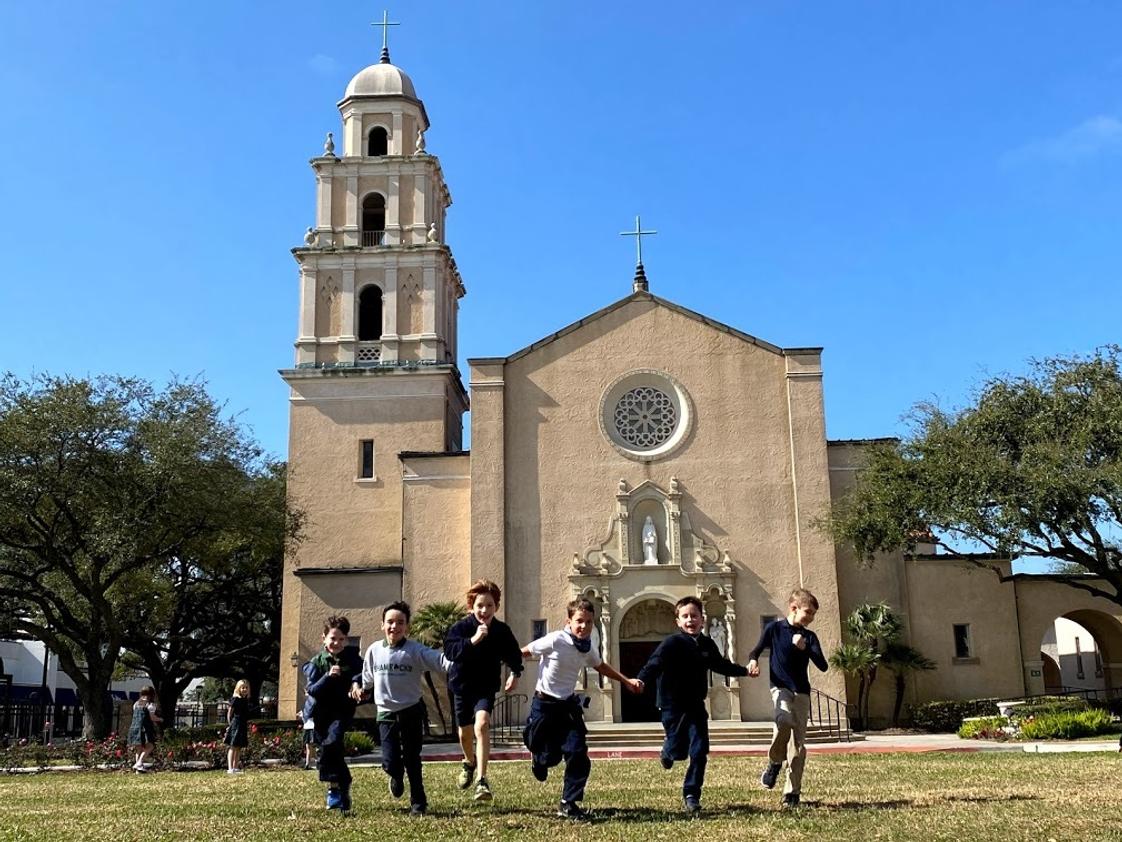
Faith-Based and Christian Private Schools in San Antonio (and How TEFA Helps)
If you want a faith-centered education for your child, San Antonio gives you real range: Catholic diocesan schools, non-denominational Christian academies, classical Christian programs, Lutheran and Baptist schools, and more. And the funding picture has changed. Texas's education freedom account program, TEFA, can now be applied toward private-school tuition at many of these schools, which puts options in reach that families once ruled out on cost alone.
That combination, a stated preference plus a funding path, is exactly why this question comes up so often in San Antonio parent groups. The work now is matching the right school to your family and confirming the money.
What Draws Families to Faith-Based Schools
Families choose faith-based schools for reasons that go beyond academics: a values-aligned environment, a tight community, character formation woven through the day, and often smaller classes than a large public campus. For many parents, the appeal is a school whose worldview matches the one at home, so the messages a child hears are consistent across both.
Those strengths are real, and so are the trade-offs. Faith-based schools can be smaller, with fewer specialized services and a narrower slate of electives and activities than a big public or charter school. Doctrinal fit is also personal, and two schools that both call themselves Christian can differ sharply in how central and how conservative their teaching is. Naming what you gain and what you give up is the honest starting point.
What TEFA Changes for Faith-Based Schools
TEFA lets eligible families direct state funds toward approved private-school tuition and related expenses, and faith-based schools are eligible to participate. That does not mean every faith-based school in the city accepts it, or that it covers full tuition everywhere, so the approval status of a specific school is something to confirm rather than assume.
The program has made faith-based options realistic for families who previously assumed private school was out of reach, but the details matter: how much support a family receives, which expenses qualify, and whether a given school participates all vary. For the mechanics, including which San Antonio schools take part and how much support to expect, our guides on faith-based private schools and TEFA and TEFA-approved private schools in San Antonio go deeper than we will here.
The Range of Faith-Based Options
San Antonio's faith-based schools are not one thing. Catholic schools tied to the Archdiocese tend to be larger, structured, and academically established, often running as K-12 pipelines with strong traditions and alumni networks. Non-denominational Christian academies vary widely, from college-prep to classical Christian models that pair a liberal-arts curriculum with a statement of faith. Smaller church-affiliated schools can offer tight community and low ratios, sometimes with fewer specialized programs. There are also Lutheran, Baptist, and other denominational schools, plus a Jewish day school, so "faith-based" covers a wide spectrum of traditions and intensities.
Catholic and Established Christian Schools

- Grades: 6th grade–12th grade
- Location: TX
- Tuition: $11,922

- Grades: K-8
- Location: San Antonio, TX
- Tuition: $5,500–$6,800

- Grades: K-8
- Location: San Antonio, TX
- Tuition: $6,500–$7,500
Catholic, Non-Denominational, and Classical Christian: How They Differ
"Faith-based" covers schools that feel quite different from one another, and knowing the categories helps you aim your search. Catholic schools tied to the Archdiocese tend to be the most established, often larger, with structured academics, long traditions, and strong alumni networks. They welcome non-Catholic families at many campuses, though the Catholic identity shapes the calendar, the sacraments, and parts of the curriculum. For families who want an academically proven school with a clear faith framework, this is often the anchor option.
Non-denominational Christian academies are the widest and most varied category. Some are college-prep schools with a light faith framing; others weave a Christian worldview through every subject. Because they answer to no single denomination, they differ campus to campus in doctrine, rigor, and culture, which makes visiting essential.
Classical Christian schools pair a classical liberal-arts model, heavy on great books, Latin, and discussion, with a statement of faith. They appeal to families who want both the intellectual tradition of classical education and an explicitly Christian environment. Then there are Lutheran, Baptist, and other denominational schools, plus a Jewish day school, each with its own tradition and intensity.
Naming which of these fits your family narrows a long list fast, and it tells you what to probe on a tour: how central the faith is, how it shows up daily, and whether the academic model matches how your child learns.
How to Vet a Faith-Based School?
Faith alignment matters, but it is not the only thing to check. Read the statement of faith and ask how doctrine shows up day to day, since schools differ on how central it is, from a light framing to a fully integrated worldview across every subject. Ask about academic outcomes and accreditation, not only mission, because a warm community still owes your child a strong education and a diploma that colleges recognize.
Ask about class sizes and, importantly, special-education capacity, since smaller faith-based schools sometimes have limited support for IEPs, dyslexia, or attention needs. Private schools are not held to the same special-education mandates as public schools, so if your child has a learning difference, ask specifically what the school can provide and who provides it. Ask, too, about teacher credentials and turnover, and how the school handles families who do not share every point of its doctrine, if that describes you.
For a clear-eyed view of pricing before you tour, our guide on how much private school costs in San Antonio helps set expectations, so you can weigh tuition against any TEFA support you may qualify for.
Compare faith-based schools that accept TEFA
Filter by tradition, grade, and funding, then save the schools worth a tour.
Explore faith-based schoolsCommunity and Class Size
One reason families choose faith-based schools, beyond the faith itself, is the community and the smaller scale. Many of these schools run tighter class sizes than a large public campus, which can mean more individual attention, teachers who know your child by name, and a parent body that shows up for one another. For a child who gets lost in a crowd, that closeness is a real draw, and it is worth asking each school what its average class size actually is rather than assuming small.
The flip side of a tight community is that it is a small world, and fit within it matters. A family that shares the school's values and rhythm often finds a genuine home there; a family that does not can feel the mismatch quickly, since there are fewer places to blend in. Visit during a normal school day, talk to current parents if you can, and pay attention to whether the community feels like one your family would be comfortable inside for years, not just whether the mission statement appeals on paper.
Balancing Faith, Academics, and Cost
The strongest choice sits where three things line up: a faith tradition that fits your family, academics you trust, and a cost you can manage, with TEFA support if you qualify. It is tempting to weight one of those heavily, the tradition, the reputation, or the price, but a school has to hold up on all three for your child to thrive there over years.
Bring both kinds of questions to every visit. Ask about chapel, doctrine, and community to test faith fit, and ask about test results, college placement, and support services to test academic strength. A school that answers both confidently, and whose TEFA status you have confirmed, is one you can commit to with clear eyes.
Confirm TEFA, Then Go Visit
Make a short list of two or three faith-based schools that match your tradition and your child's grade, then confirm each school's TEFA participation status directly before you fall in love with any of them. Use School Path to filter San Antonio faith-based schools by tradition and funding, save your top choices, and book tours. Bring questions about both faith and academics to each visit, because the right school has to earn confidence on both.
Match faith, academics, and cost in one search
Filter by tradition and funding, save your top schools, and connect with them.
Browse faith-based schoolsFrequently Asked Questions
Can TEFA be used for faith-based private schools in San Antonio?
Yes. Faith-based schools are eligible to participate in Texas's education freedom account program, and many San Antonio Catholic and Christian schools do. Participation and the amount of support vary by school, so confirm a specific school's status directly.
What types of faith-based schools does San Antonio have?
The range includes Archdiocese Catholic schools, non-denominational and classical Christian academies, Lutheran and Baptist schools, and a Jewish day school. They vary widely in size, academic model, and how central their faith teaching is.
Do faith-based schools support students with learning differences?
It varies, and often less than public schools, which are held to special-education mandates that private schools are not. If your child has an IEP, dyslexia, or attention needs, ask each school specifically what support it offers and who provides it before enrolling.
How do I confirm a school takes TEFA?
Ask the school directly about its current participation status, since it can change, and cross-check against School Path and the state's approved-school information. Do this before you fall in love with a school, so cost does not become a surprise.
What should I ask on a faith-based school tour?
Ask how doctrine shows up day to day, about accreditation and academic outcomes, class sizes and teacher turnover, special-education support, and how the school treats families who do not share every point of its faith. Test both faith fit and academic strength.
Do I have to share the school's faith to enroll?
Not always. Many Catholic and Christian schools welcome families of other backgrounds, though the school's faith shapes the calendar, curriculum, and community. Ask each school directly how it treats families who do not share every point of its doctrine, so you know what daily life will feel like.
What is the difference between a Catholic and a classical Christian school?
Catholic schools are tied to the Archdiocese and center on Catholic identity, sacraments, and often an established K-12 tradition. Classical Christian schools pair a classical liberal-arts curriculum, with great books, Latin, and discussion, with a Christian statement of faith. They are different traditions and different academic models.
Does TEFA cover the full tuition at faith-based schools?
Not always, and it varies by school and by family. At some schools the support covers most or all of tuition; at others it covers part. Confirm the amount with the specific school, and see our TEFA guides for how the funding works and which San Antonio schools participate.